China Top Power Cable Types and Their Applications Explained?
Power cables are essential components in modern electrical systems. In China, various types of power cables serve distinct needs across industries. Understanding these types and their applications is crucial for selecting the right cable for specific projects.
In cities and industrial zones, power cables transmit electricity safely and efficiently. They vary in size, insulation, and material. For instance, low-voltage cables work well for residential buildings, while high-voltage cables support factories. However, not all cables perform equally under different conditions. Evaluating durability and resistance is necessary to avoid costly failures.
Choosing the appropriate power cable can be challenging. Some may overlook critical factors such as environmental conditions and load requirements. Knowing how cables interact with their surroundings ensures better performance. Awareness of these details can prevent issues and enhance reliability in electrical systems.
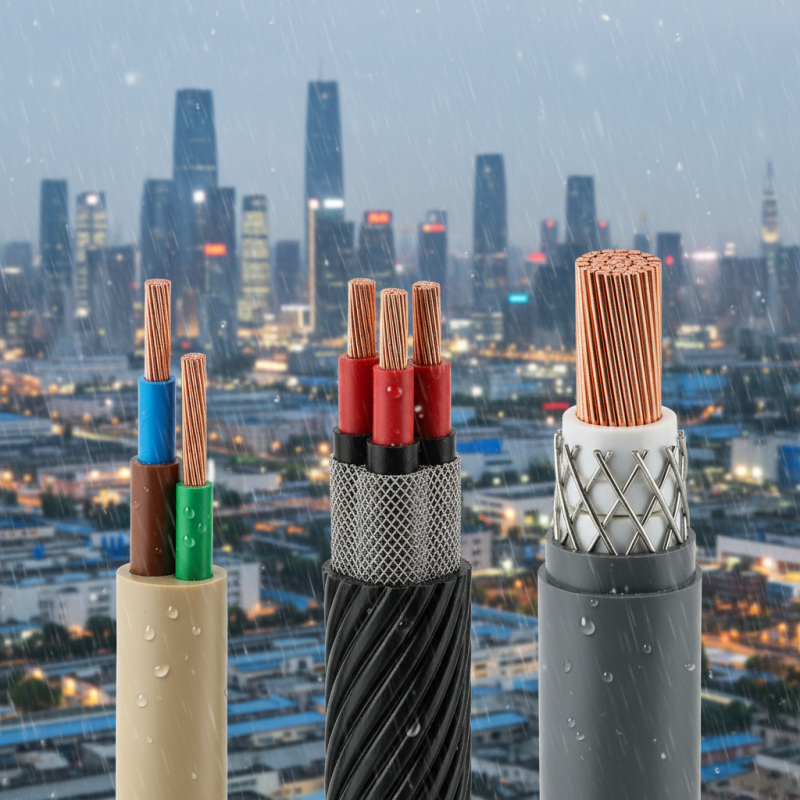
Overview of Power Cable Types in China
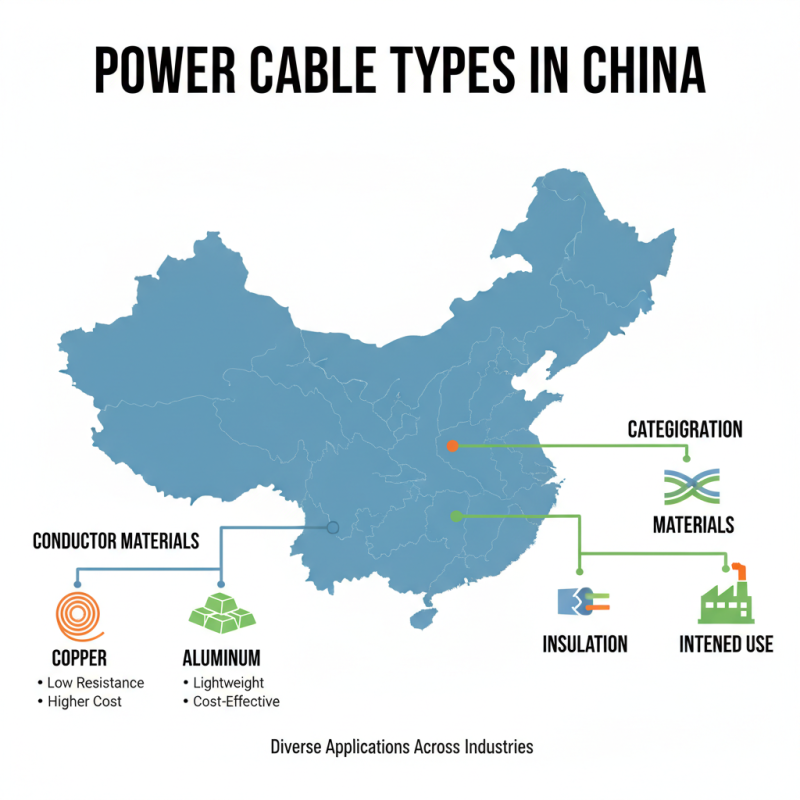
In China, the power cable industry is diverse, with various types serving distinct purposes. Cables are categorized based on their materials, insulation, and intended use. Copper and aluminum are common conductors. Each material has its advantages and disadvantages. Copper is less resistant and more expensive, while aluminum is lightweight and cost-effective.
The types of power cables include low voltage, medium voltage, and high voltage variants. Low voltage cables are typically used in residential buildings. They handle up to 1,000 volts and are essential for safe electricity distribution in homes. Medium voltage cables operate between 1 kV to 35 kV. They are crucial for industrial applications and urban power grids. High voltage cables, on the other hand, are designed for transmitting electricity over long distances. They are often used in large power transmission networks.
Understanding these cable types is vital yet challenging. Many users may struggle to select the appropriate cable for their specific needs. Detailed specifications can be overwhelming, leading to mistakes. This reflects a gap in knowledge. Education in proper cable selection and application is essential for safety and efficiency in power systems.
Characteristics and Specifications of Common Power Cables
Power cables are essential in electrical systems, conveying electricity from one point to another. The most common types include XLPE, PVC, and EPR cables. Each type has specific characteristics that suit different environments.
XLPE cables, for instance, are known for their high thermal resistance. They work well in high-voltage applications, making them suitable for power transmission.
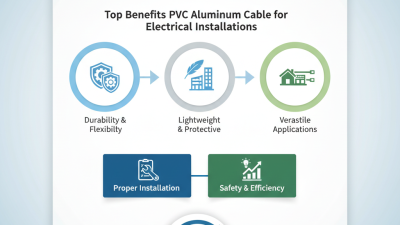
PVC cables offer flexibility and are resistant to chemical damage. They are often used in residential wiring and light industrial applications.
EPR cables, on the other hand, provide excellent resistance to moisture and heat. This makes them ideal for underground installations. However, they can be more expensive compared to other types. Choosing the right cable type is crucial for safety and efficiency. Oversizing a cable can lead to inefficiencies. Undersizing can cause overheating.
Proper specifications are vital. Current ratings, voltage levels, and insulation types must all be taken into consideration. Ignoring these details can lead to unexpected failures. Users should regularly inspect cables for wear or damage. Some cables may degrade faster than expected. Understanding these characteristics ensures safer and more reliable electrical installations.
Typical Applications of Various Power Cable Types
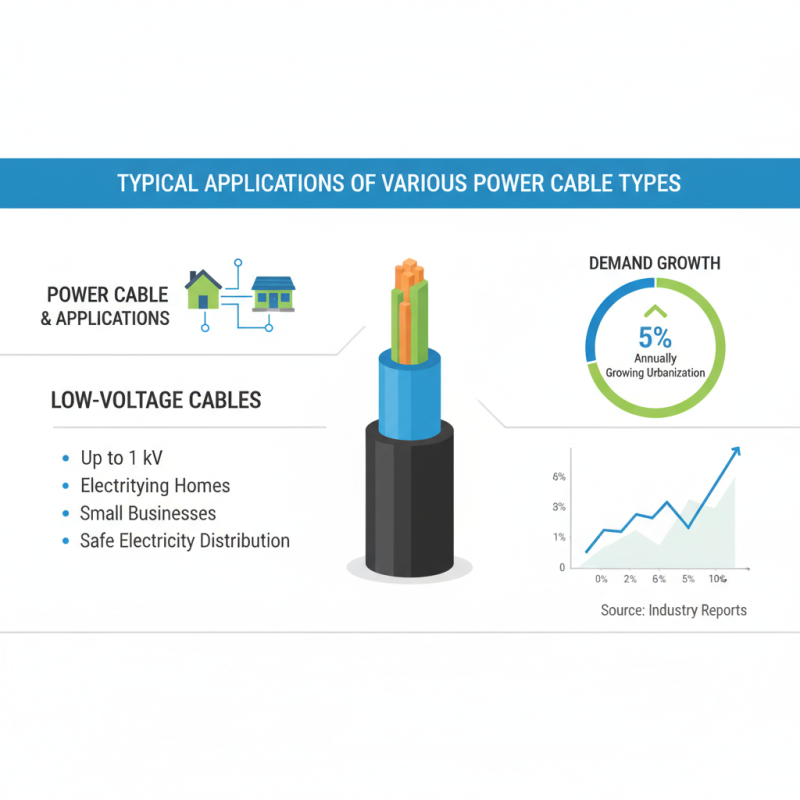
Power cables play a crucial role in modern infrastructure. Different types of power cables serve various applications in both industrial and residential settings. For instance, low voltage cables are widely used for electrifying homes and small businesses. They typically handle voltages up to 1 kV and are essential in distributing electricity safely. According to industry reports, demand for low voltage cables is expected to rise by 5% annually due to growing urbanization.
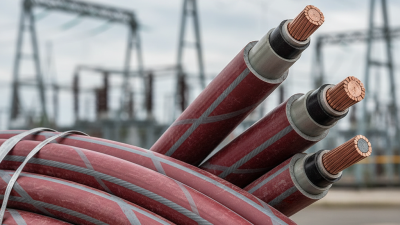
Medium voltage cables, on the other hand, are used in applications that require more power. They carry voltages between 1 kV and 35 kV, often found in industrial facilities and utility companies. These cables are critical in connecting power stations to substations. They ensure efficient power distribution in larger networks. Notably, medium voltage cable sales saw an increase of 8% last year, reflecting industrial growth.
High voltage cables are another vital category. They are essential for transmitting power over long distances. Operating at voltages above 35 kV, these cables are used in large-scale energy projects, including wind farms and grids. The high voltage segment alone is projected to grow by 6% in the next five years, driven by renewable energy initiatives. However, the manufacturing process of high voltage cables often faces challenges, such as material selection and insulation quality.
Challenges and Innovations in Power Cable Technology
Power cable technology faces numerous challenges in its evolution. One main issue is the demand for higher capacity cables. As cities expand and industrial needs grow, existing infrastructures often struggle to keep pace. Engineers must innovate to increase efficiency and reduce costs, all while adhering to safety standards. This constant pressure can lead to rushed solutions or untested materials.
Another significant challenge lies in environmental concerns. The production and disposal of power cables can contribute to pollution. Manufacturers are now focusing on developing eco-friendly materials. However, the transition can be slow and fraught with setbacks. Striking a balance between performance and sustainability is an ongoing struggle.
Advances in monitoring technology present a promising innovation. Smart cables equipped with sensors provide real-time data. This technology helps identify potential issues before they escalate. While useful, the implementation of these systems can be complex. The industry continues to learn how to integrate digital tools effectively. Overall, while progress is evident, the road ahead is filled with hurdles requiring thoughtful exploration.
Future Trends in China’s Power Cable Industry
The power cable industry in China is evolving rapidly. As technology advances, so do cable designs and materials. Trends indicate a shift toward higher voltage ratings and improved insulation. This allows for increased efficiency in energy transmission. Environmental concerns are pushing manufacturers to explore eco-friendly materials.
Tips: Always consider energy efficiency when selecting materials. Sustainable choices can reduce the overall carbon footprint.
Another emerging trend is the integration of smart technology in power cables. Smart cables can monitor performance and detect faults. This enhances safety and reliability in power distribution. However, technology implementation can be costly. Manufacturers must assess the long-term benefits versus initial investments.
Tips: Investing in smart technology may offer significant future savings. Monitor industry developments to stay ahead of competitors.
Understanding these trends is crucial for industry professionals. They face the challenge of balancing innovation with cost-effectiveness. As the market grows, the need for adaptable solutions will continue to rise.
China's Power Cable Types and Their Applications



 +86 13777722188
 WHATSAPP
 PHONE
PHONE E-MAIL