How to Choose the Right Insulated Copper Wire for Your Project?
Choosing the right Insulated Copper Wire is crucial for any electrical project. Industry reports show that over 70% of electrical failures stem from improper wire selection. This highlights the need for thoughtful consideration when choosing materials.
According to industry expert John Smith, “Using the correct Insulated Copper Wire can prevent costly mistakes and enhance project longevity.” His words emphasize the importance of understanding wire characteristics and application requirements.
Selecting Insulated Copper Wire isn't always straightforward. Different insulation types serve various functions, impacting safety and efficiency. Misjudgments here can lead to performance issues and waste. Careful evaluation of wire specifications and standards can guide better decisions.
Understanding the Basics of Insulated Copper Wire Types
Insulated copper wire is vital for many electrical projects. Understanding the different types is crucial for success.
Solid copper wire offers durability and conductivity. It’s often used in permanent installations.
Stranded copper wire is flexible and easier to handle. This makes it ideal for applications requiring movement.
There are various insulation options available. PVC is common and affordable.
It resists moisture and heat, but it has its limitations. When higher temperatures or special conditions exist, other materials like silicone or fiberglass may be preferable. Each material presents trade-offs.
Choosing the correct gauge is also important. Thicker wires carry more current but are less flexible.
Thinner wires offer ease of use, but may overheat if overloaded. It’s easy to underestimate the importance of this choice.
Many encounter issues when they pick the wire without considering their project’s specifics. Hence, analyzing all these factors is essential for effective insulation selection.
Identifying Your Project's Electrical Requirements
When starting an electrical project, understanding your project's electrical requirements is crucial. This ensures you choose the right insulated copper wire. Begin by assessing the voltage and current ratings needed for your specific application. These ratings influence the wire gauge and insulation type, so it’s essential to have accurate measurements.
Consider the environment where the wire will be used. Will it be exposed to moisture, heat, or chemicals? Different insulation materials offer various levels of protection against these factors. For example, some insulations are better suited for wet or marine environments. If you're unsure about the conditions, it might be helpful to consult with an expert or conduct further research.
Pay attention to wire lengths as well. Longer runs may require thicker wire to reduce voltage drop. A common mistake is underestimating the length, which could lead to insufficient power supply. Keep the wire's amperage carrying capacity and the distance in mind. Sometimes, the smallest details can lead to significant issues in project outcome. It’s important to reflect on your choices—ensuring you have the right wire can make or break a project.
Choosing the Right Insulated Copper Wire for Your Project
This bar chart illustrates the suitable gauge sizes of insulated copper wire based on different project current requirements. Selecting the correct gauge is essential to ensure safety and efficiency in electrical installations.
Evaluating Wire Gauge and Its Impact on Performance
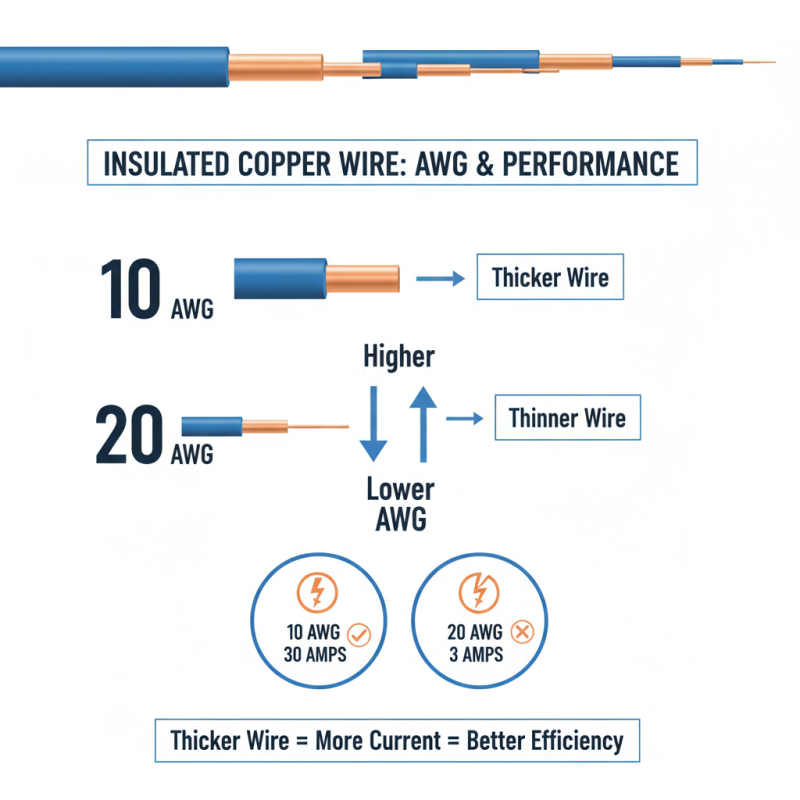
When choosing insulated copper wire, wire gauge significantly impacts performance. The American Wire Gauge (AWG) system classifies wire sizes. Lower AWG numbers indicate thicker wires. A thicker wire can carry more current. For instance, a 10 AWG wire can handle up to 30 amps, while a 20 AWG wire typically carries only 3 amps. This difference can affect overall project efficiency.
Voltage drop is another critical aspect. It refers to the reduction in voltage as electricity travels along the wire. Thicker wires generally have lower resistance. According to the National Electrical Code (NEC), a voltage drop exceeding 5% could lead to operating issues. Using a 12 AWG wire instead of a 14 AWG can reduce this drop significantly. However, in some scenarios, a thicker wire may be unnecessary, adding weight and cost to the project.
It's essential to match the wire gauge to the project's requirements. Overestimating the needed gauge can lead to wasted resources. Conversely, choosing a gauge that's too thin may risk overheating. Evaluating these factors helps ensure you select the right insulated copper wire for optimal performance. Balancing cost, weight, and electrical efficiency requires careful consideration.
Comparing Insulation Materials for Durability and Safety
When choosing insulated copper wire, the insulation material plays a crucial role in durability and safety. There are several common types of insulation, including PVC, XLPE, and Teflon. According to a report by the National Electrical Manufacturers Association (NEMA), PVC is widely used due to its cost-effectiveness and decent durability. It can handle temperatures up to 75°C. However, in high-temperature applications, XLPE is a better choice, as it withstands temperatures up to 90°C and offers excellent resistance to chemicals.
Teflon insulation is often touted for its superior performance. It can endure extreme temperatures, up to 260°C. Yet, its high cost may not be justified for every project. A study published by MIT’s Energy Initiative revealed that investing in the right insulation pays off in the long run. Projects using high-quality insulation materials saw a reduction in electrical losses by as much as 30%.
It's essential to weigh the benefits and drawbacks of each insulation type. Sometimes, the cheapest option may lead to higher maintenance costs. Also, consider the environmental impact. Not all insulation materials are recyclable. In some instances, choosing durability can lead to safer outcomes. Always evaluate your project's specific needs before making a decision.
Determining Environmental Conditions for Wire Selection
When choosing insulated copper wire, understanding environmental conditions is essential. Different environments affect wire performance significantly. For instance, humidity can cause corrosion. A study by the Institute of Electrical and Electronics Engineers notes that moisture levels above 70% can drastically reduce wire lifespan.
Temperature impacts the insulation material. In high-temperature settings, some insulations may degrade faster. According to the National Electrical Manufacturers Association, wires operating beyond 90°C can face insulation failure. This means selecting wires rated for higher temperatures is crucial.
In outdoor settings, UV exposure is another factor to consider. Insulation can break down under prolonged sunlight. Reports indicate that up to 20% of wire failures in outdoor applications result from UV damage. Always check the wire's UV resistance if it will be exposed. Select wire with the right ratings for your environment to avoid future problems.



 +86 13777722188
 WHATSAPP
 PHONE
PHONE E-MAIL