How to Choose the Right Insulated Wire for Your Project?
Choosing the right insulated wire for your project is crucial. According to the "2023 Wire and Cable Industry Report," the global insulated wire market is projected to reach $48 billion by 2026. This significant growth indicates a rising demand for high-quality insulated wires across various applications. As industry expert Dr. Emily Carter states, “Selecting the appropriate insulated wire is essential for safety and efficiency in electrical systems.”
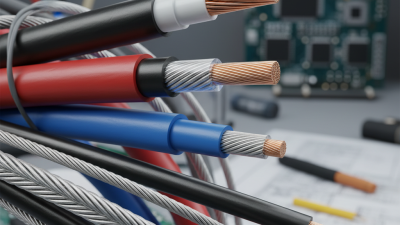
Insulated wires come in various types and specifications. Each serves different purposes and environments. Understanding the insulation material, conductor size, and voltage rating is vital. For example, PVC insulation is common for its durability and flexibility, while XLPE insulation is preferred for higher thermal ratings. Choosing incorrectly can lead to project failures.
Additionally, the industry is witnessing innovation in materials and manufacturing processes. This evolution aids in better performance and longevity of insulated wire products. However, the vast options can be overwhelming. It requires careful consideration and sometimes difficult decisions to ensure optimal results. The impact of these choices can be significant, making it imperative to approach the selection process with diligence.

Understanding Insulated Wire Types and Their Applications
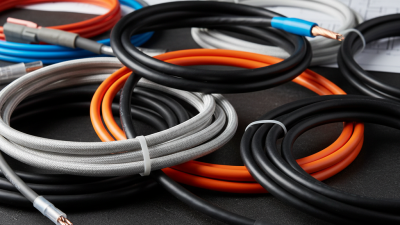
When selecting insulated wire, understanding the different types is essential. Each type has unique properties suited for specific applications. For instance, PVC insulated wire is affordable and versatile. It works well for general electrical projects. However, it may not endure high temperatures.
On the other hand, silicone insulated wire offers superior heat resistance. It is ideal for environments with fluctuating temperatures. Additionally, Teflon insulated wire provides excellent chemical resistance. This makes it a go-to choice for industrial applications. Examining your project’s requirements will guide you in making the right choice.
It’s important to consider not only the insulation material but also the wire gauge. Thinner gauges are suitable for low-power applications, while thicker gauges handle more current. Yet, using a gauge too thick can be overkill. This could mean unnecessary costs. Balancing safety and functionality is crucial. Understanding the environment where the wire will be used will help in making informed decisions.
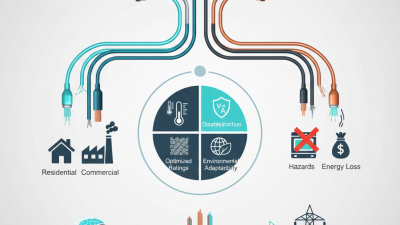
Insulated Wire Types and Their Applications
Key Factors to Consider When Selecting Insulated Wire
When selecting insulated wire for your project, specific factors play a critical role. Understanding the voltage rating of the wire is essential. This rating indicates the maximum voltage the wire can safely handle. Choosing a wire with a higher voltage rating than needed can provide an added safety margin. It prevents overheating and potential failures.
Wire insulation types also matter. Different materials, such as PVC or XLPE, provide varying levels of protection against heat, moisture, and chemicals. Consider the environment where the wire will be installed. For instance, outdoor applications require more robust insulation to resist weather conditions. The wire's gauge is another important detail. Thicker wires can carry more current but may be less flexible.
One might overlook the impact of wire length on resistance. Longer wires could lead to higher resistance, potentially affecting performance. Experimenting with different combinations can lead to a better outcome. Finally, attention to local code requirements is necessary. Ensuring compliance helps avoid potential risks or fines during inspections. Selecting the right insulated wire is pivotal, but it often involves careful consideration and adjustments along the way.
Evaluating Temperature Ratings and Voltage Requirements
When selecting insulated wire for your project, it's crucial to evaluate two main factors: temperature ratings and voltage requirements. Temperature ratings determine how well the wire can perform in various environmental conditions. According to the National Electrical Code (NEC), wires are often rated for specific temperature ranges. For instance, THHN wire can handle up to 90°C, making it suitable for high-heat applications. Understanding the surrounding conditions can help avoid wire failure.
Voltage requirements are another essential aspect. Different applications have varying voltage needs. For example, a standard household circuit typically operates at 120V, while industrial setups may require 480V or higher. An incorrect voltage rating can lead to overheating or insulation breakdown. The American Wire Gauge (AWG) system aids in discerning proper wire sizes for voltage levels. Underestimating either factor increases failure risk and potential hazards.
Tip: Always match the wire's temperature rating with your project's environment.
Tip: Consult the NEC guidelines to ensure compliance with voltage requirements.
This careful evaluation minimizes project risks and enhances safety and reliability. Failure to do so might lead to costly mistakes. Remember to assess project specifics and apply appropriate values for effective outcomes.
Assessing Wire Gauge and Its Impact on Your Project
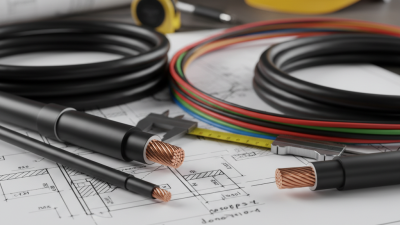
When selecting insulated wire, understanding wire gauge is crucial. Wire gauge refers to the thickness of the wire. A lower gauge number means a thicker wire, while a higher number indicates a thinner one. This choice significantly impacts your project's performance, including current capacity and resistance.
Higher gauge wires, while easier to handle, can lead to inefficiencies. They may not support the required current, causing overheating. Thicker wires, although more challenging to work with, can handle heavier loads without issues. Each project's specifics determine the right balance.
It's essential to assess the project's power requirements carefully. An under-gauged wire can fail, which may create safety hazards. A thorough understanding of the project's electrical demands informs your choice. Don't underestimate the importance of this decision, as it can lead to costly mistakes or project failures. Reflecting on wire gauge decisions is vital for long-term reliability.
Common Mistakes to Avoid When Choosing Insulated Wire
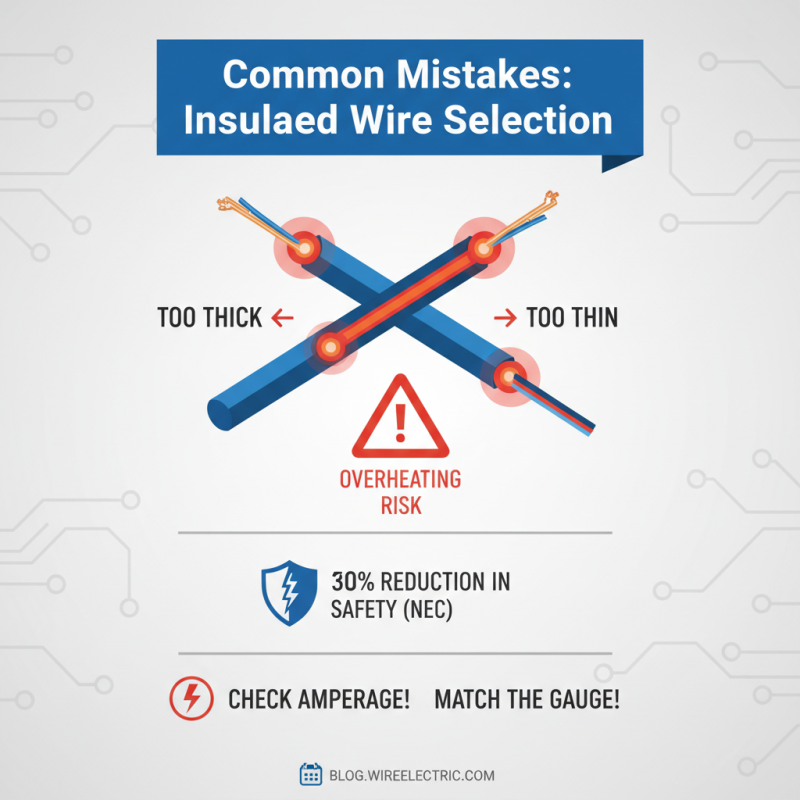
When selecting insulated wire for any project, common mistakes can lead to costly errors. One significant oversight is ignoring the wire gauge. Using a wire that is either too thick or too thin can cause overheating. According to the National Electrical Code, a mismatch can lead to a 30% reduction in safety. Always check the amperage requirements of your application to determine the proper gauge.
Another frequent error involves choosing the wrong insulation type. Different environments demand different insulation properties. For instance, PVC is suitable for general use, but it may not withstand extreme heat. The American Wire Gauge (AWG) standard highlights the importance of selecting insulation that suits your specific conditions. Underestimating this aspect can compromise performance and longevity.
Finally, neglecting the wire's voltage rating can be detrimental. Many users fail to match voltage ratings, leading to insulation breakdown. The Institute of Electrical and Electronics Engineers recommends reviewing both voltage and environmental factors. Many accidents arise from such oversights, emphasizing the need for thorough research and attention to detail when selecting insulated wire.



 +86 13777722188
 WHATSAPP
 PHONE
PHONE E-MAIL