Essential Tips for Choosing Single Core Cable for Your Needs?
Choosing the right Single Core Cable can significantly impact electrical system performance. Industry reports indicate that improper selection may cause energy inefficiencies. According to electrical expert Dr. John Parker, "The right cable choice is fundamental for safety and efficiency."
Understanding specifications can be tricky. Single Core Cables vary widely in material, voltage capacity, and insulation type. An inappropriate choice may lead to temperature-related failures or energy loss. A report by the Electrical Safety Council highlights that 30% of electrical fires are caused by faulty wiring choices.
Awareness of these risks is critical. It’s not just about selecting a cable; it's about ensuring safety and functionality. Seek advice from qualified professionals. Factors like installation environment and load must be considered. As Dr. Parker warns, "A small oversight can result in big consequences." Emphasizing this complexity helps to navigate the intricacies of Single Core Cable selection effectively.
Understanding Single Core Cable Types and Specifications
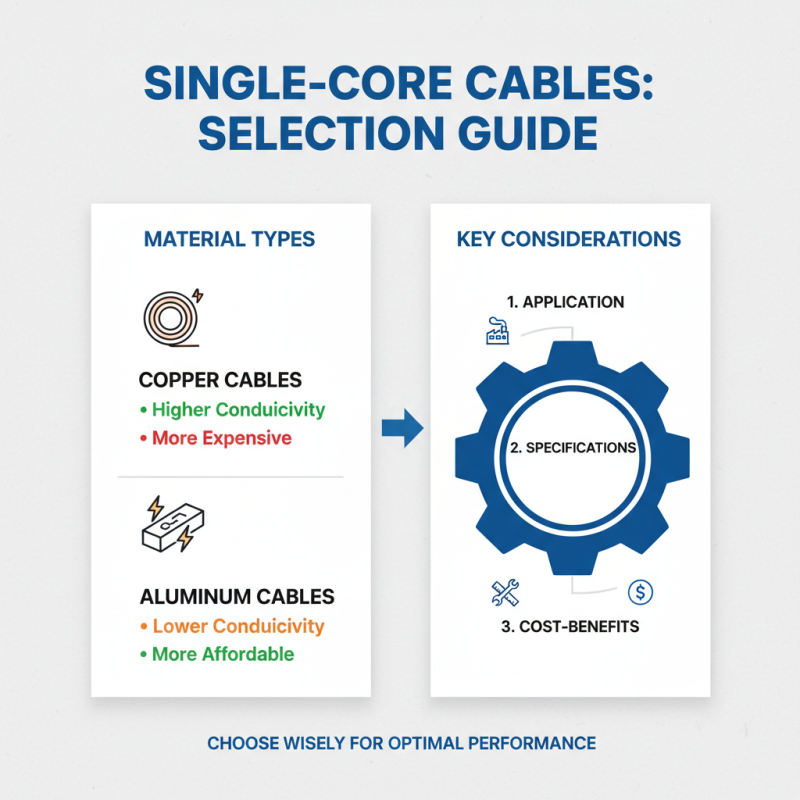
When selecting single core cables, it’s crucial to understand the types and specifications available. Single core cables come in various materials, such as copper and aluminum. Copper cables often provide better conductivity. However, they can be more expensive than aluminum options. It's essential to consider the specific application for which the cable will be used.
Insulation types are also significant. They can differ in thermal resistance, chemical stability, and flexibility. For example, PVC insulation is common but may not withstand high temperatures. On the other hand, thermoplastic elastomer (TPE) offers better flexibility but at a higher cost. Choosing the right insulation can impact performance and longevity.
Pay attention to cross-sectional area too. Larger areas handle more current but can be cumbersome. Smaller areas save space but may overheat if overloaded. Assessing the environment is necessary. Will the cable be exposed to moisture or chemicals? Each factor plays a role in the performance of single core cables. A well-informed choice can prevent mishaps down the line. It's a process that requires reflection and sometimes trial and error.
Key Factors to Consider When Selecting Single Core Cable
When selecting single core cable, consider the application. For household wiring, a standard gauge may work. For industrial use, you might need thicker cables. Think about the environment too. Will the cable be exposed to moisture or extreme temperatures?
Wattage is another key factor. Ensure the cable can handle the load. Overloading can lead to failure. It’s important to calculate the electrical requirements accurately.
Tip: Check the insulation type. Different materials offer varying levels of protection. Also, be aware of flexibility. Will you need the cable to bend easily?
Don’t forget to reflect on your safety needs. Choosing a cable that doesn’t meet your requirements can be risky. Always prioritize quality and compatibility for reliable performance.
Essential Tips for Choosing Single Core Cable for Your Needs
| Factor |
Description |
Recommended Value |
| Conductor Material |
Choose between copper or aluminum based on conductivity and flexibility. |
Copper for high conductivity; Aluminum for cost-effectiveness. |
| Voltage Rating |
Ensure the cable can handle the required voltage level for your application. |
Minimum 300V for most low-voltage applications. |
| Temperature Rating |
Select a cable that operates effectively within your environment's temperature range. |
Up to 70°C for most standard applications. |
| Insulation Type |
Consider the insulation material for protection against environmental factors. |
PVC or XLPE for standard durability. |
| Cable Diameter |
Check the diameter to ensure it fits within your project constraints. |
Based on AWG (American Wire Gauge) standards. |
| Application |
Identify the specific use-case, such as industrial machinery or residential wiring. |
Choose accordingly for safety and effectiveness. |
Common Applications for Single Core Cable in Various Industries
Single core cables are widely used across different industries for various applications. In construction, they are essential for power distribution. Electricians often prefer them for ease of installation. The simplicity of single core cables allows for quicker connections and less clutter.
In manufacturing, single core cables play a critical role. They are often used in machinery to convey power. Their durability suits harsh environments, making them ideal for factories. However, selecting the right insulation type can be tricky. It’s crucial to consider the operating temperature and exposure to chemicals.
Telecommunications also benefits from single core cables. They often connect devices within data centers. The lightweight nature of these cables simplifies setup and maintenance. Yet, one must be cautious about cable length. Longer cables can lead to signal loss, which could disrupt service. Understanding specific needs is vital to making the best choice.
Safety Standards and Regulations for Single Core Cable Usage
When selecting single core cables, understanding safety standards and regulations is crucial. Adhering to these guidelines minimizes risks. Cables must be compliant with relevant electrical codes. This ensures safe operation in various environments. Overlooking these standards can lead to accidents.
Consider the insulation type. It plays a vital role in safety. For instance, PVC is common but may not suit high-temperature areas. Choose based on your application needs. Always check for certified markings on cables. These indicate compliance with safety norms.
Installation also matters. Proper techniques reduce hazards. Ensure cables are secured and not subject to excessive strain. Regular inspections are helpful. They can catch potential issues early. Remember, ignoring safety regulations invites trouble. Be diligent in your selection process.
Essential Tips for Choosing Single Core Cable for Your Needs
This chart illustrates the importance rating of various attributes to consider when choosing single core cables. Fire resistance and temperature rating are critical factors, followed by current carrying capacity and voltage rating.
Maintenance Tips for Longevity of Single Core Cables
Single core cables are essential in various electrical applications. To ensure these cables last long, regular maintenance is crucial. A study by the International Electrotechnical Commission indicates that proper care can extend cable lifespan by 30%. This means that neglect could lead to premature failures, causing costly downtime.
One of the key maintenance tips is to regularly inspect the cables for visible wear. Look for cracks, fraying, or discoloration. Such signs could mean the cable is at risk of short-circuiting. Additionally, cleaning the cable connections can prevent corrosion. A report from the Institute of Electrical and Electronics Engineers states that corrosion can reduce conductivity by up to 50%. Hence, keeping connections clean is vital for efficient operation.
It’s also essential to store single core cables properly. They should be kept in a cool and dry place, away from chemical exposure. Improper storage can lead to damage, which is often overlooked. Users sometimes forget that even the best cables have limits. Overloading or bending the cables beyond their capacity will significantly shorten their lifespan. Regular maintenance checks and mindful usage are vital for ensuring the durability of single core cables.



 +86 13777722188
 WHATSAPP
 PHONE
PHONE E-MAIL