Leave Your Message

China Best Antenna Cable Manufacturers for Global Buyers

China has become a major sourcing hub for coaxial and RF products, including Antenna Cable for telecommunications, broadcast, security, and wireless infrastructure. Global buyers often value competitive pricing, flexible production, and extensive factory capacity. Yet supplier selection requires more than reviewing a product catalog.

David M. Pozar, a respected microwave engineer and author of Microwave Engineering, offers a useful principle: “The performance of a system depends on the details of its interconnections.” This perspective applies directly to Antenna Cable. Conductor material, dielectric quality, shielding density, connector design, and cable geometry can influence signal loss and long-term stability. Experienced manufacturers should provide impedance data, attenuation charts, return-loss results, and documented quality procedures. Factory audits also reveal practical details, such as crimping consistency, storage conditions, and testing equipment.

Reliable Chinese manufacturers usually support samples, customized lengths, connector assemblies, and traceable production records. Certifications can help, but they should never replace independent verification. A polished website proves little. Field experience matters more.

No shortlist is flawless. Some suppliers communicate quickly but lack technical depth. Others offer strong engineering but slow production schedules. A careful comparison should examine materials, testing, delivery capability, after-sales support, and actual application performance. The best Antenna Cable partner is not always the cheapest factory. It is the supplier that consistently protects signal integrity from the production line to the installation site.
China Best Antenna Cable Manufacturers for Global Buyers

Antenna Cable Manufacturing in China: Industry Scope and Product Types

China Best Antenna Cable Manufacturers for Global Buyers
Antenna Cable Manufacturing in China: Industry Scope and Product Types

China’s antenna cable industry covers materials, extrusion, shielding, connector assembly, and laboratory testing. Grand View Research valued the global coaxial cable market at about US$13.6 billion in 2023. Its report forecasts a 6.4% compound annual growth rate through 2030. This demand supports broad Chinese production capacity, from standard communication cables to custom low-loss assemblies.

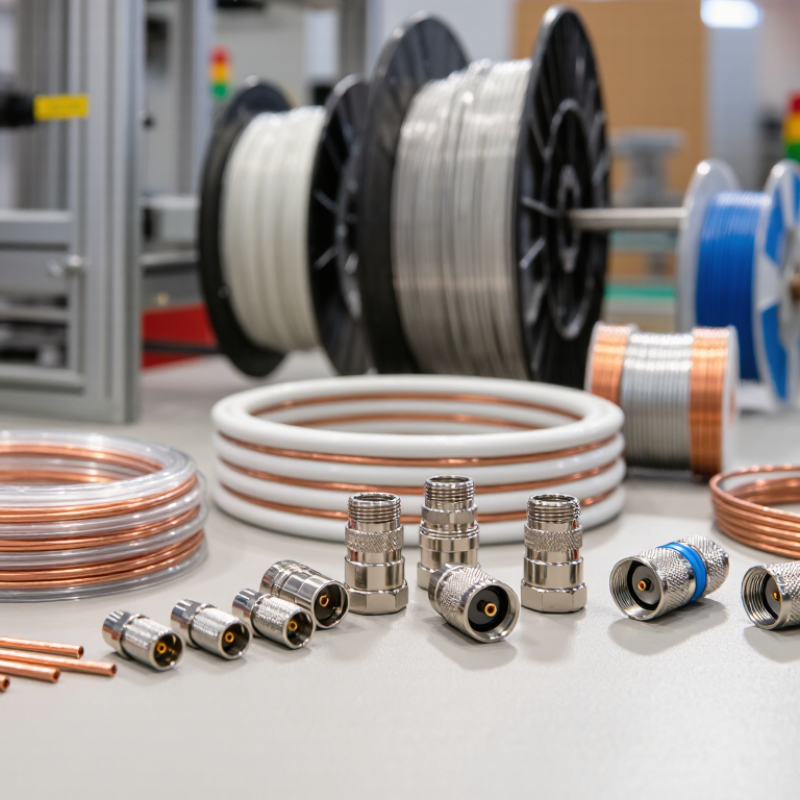
Common products include 50-ohm RF coaxial cables, 75-ohm broadcast cables, feeder cables, jumper assemblies, and semi-rigid designs. Buyers also request corrugated copper cables for base stations and flexible cables for indoor equipment. Outdoor versions usually require UV-resistant jackets, waterproof sealing, and stable performance across temperature changes. Small details matter.

Professional factories normally verify impedance, attenuation, return loss, shielding effectiveness, and VSWR. They may also conduct bending, tensile, salt-spray, and connector pull tests. MarketsandMarkets projected the RF cable market to grow from roughly US$1.2 billion in 2023 to US$1.6 billion by 2028. However, such reports often combine antenna, radio, and other RF applications. The boundary is imperfect. Buyers should request test records, conductor specifications, jacket materials, and sample approval before placing volume orders.
Key Criteria for Evaluating Chinese Antenna Cable Manufacturers

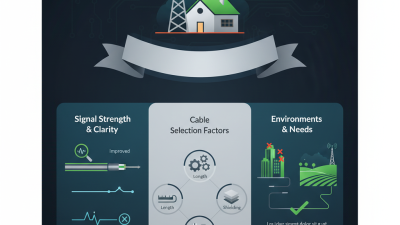
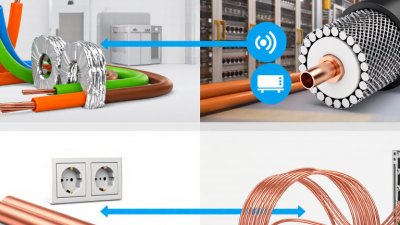
Global buyers should judge Chinese antenna cable manufacturers by evidence, not attractive catalog photos. Request samples with recorded attenuation, return loss, shielding effectiveness, and connector pull-force results. Ask whether tests cover your exact frequency range, cable length, and operating temperature. A cable that performs well on a bench may weaken after repeated bending or outdoor exposure. Experienced manufacturers can explain these failure points clearly. They should also provide material specifications, inspection records, and traceable batch numbers.

Evaluate production control as carefully as technical performance. Visit the factory when practical, or request a live video inspection of extrusion, braiding, assembly, and final testing. Check copper purity, dielectric consistency, jacket thickness, and connector alignment. Confirm whether calibration certificates are current and issued by competent laboratories. Clear answers matter. Vague promises do not. Review sample approval procedures, packaging protection, lead times, and corrective-action records. Some suppliers may pass one test while overlooking moisture ingress, so challenge the test method and repeat key checks independently. Small details, such as uneven connector plating, can reveal larger process weaknesses.

Tips: Compare at least three samples under identical conditions. Request a pre-shipment inspection. Keep one approved sample as a reference. Do not rely on price alone. Even careful buyers can miss a hidden tolerance issue.

Leading Manufacturer Capabilities for Global Buyer Requirements

Global buyers need more than low-priced antenna cables. They need stable performance across different networks, climates, and installation conditions. The GSMA Mobile Economy 2024 report counted 5.6 billion unique mobile subscribers worldwide in 2023. That scale increases pressure on cable suppliers. According to MarketsandMarkets’ 2024 Coaxial Cable Market study, the sector may grow at about 6% annually through 2029. Manufacturing capacity must grow with measurable quality.

Reliable factories should control 50-ohm and 75-ohm designs, conductor materials, shielding layers, and connector tolerances. Each batch needs attenuation, return loss, VSWR, tensile strength, and bending tests. Production records should remain traceable from raw materials to shipment. ISO 9001-based procedures help, but certificates alone are not enough. Buyers should request recent test reports and sample verification. Small details matter.

A capable manufacturer also supports custom lengths, cable jackets, labeling, packaging, and regional compliance documents. Outdoor projects may require UV-resistant jackets and stable performance between extreme temperatures. Indoor assemblies need flexibility and clean connector fitting. A perfect cable is an unrealistic promise. In practice, suppliers should disclose tolerance limits and known weaknesses. We still review failed samples, because one connector defect can affect an entire installation. This honest feedback improves future production.

Quality Standards, Testing Processes, and Certification Readiness

China Best Antenna Cable Manufacturers for Global Buyers

Reliable antenna cable manufacturing begins with controlled materials and repeatable processes. Quality teams verify conductor purity, insulation thickness, shielding coverage, and connector dimensions. Each production lot should carry a traceable code. This links raw materials to operators, equipment, and inspection records. Small details matter.

Testing normally includes impedance checks, insertion loss, return loss, and shielding effectiveness. Technicians also inspect solder joints, crimp strength, and cable flexibility. Environmental tests may include temperature cycling, humidity exposure, and vibration. Samples should be tested before and after stress conditions. A cable can pass one test and still fail in the field. That possibility deserves attention.

Certification readiness requires organized evidence, not attractive paperwork alone. Manufacturers should maintain calibrated equipment records, test methods, corrective actions, and material declarations. Documents may support requirements related to electrical safety, restricted substances, and electromagnetic performance. Independent laboratory testing can strengthen buyer confidence. However, factory reports should remain clear about sample size and limitations. A rushed inspection sometimes misses connector damage under the jacket. Experienced buyers should request photographs, raw data, and recent audit findings. Manufacturing teams should also review failed samples openly, because perfect records may hide weak learning.

China Best Antenna Cable Manufacturers for Global Buyers: Quality Standards, Testing Processes, and Certification Readiness

EU RoHS maximum concentration limits for restricted substances in homogeneous materials are a practical certification-readiness benchmark for antenna cable insulation, jackets, and components. Lower limits require tighter material control and laboratory verification.

Reference: Directive 2011/65/EU and subsequent amendments. Limits shown are maximum concentrations by weight in homogeneous materials: 0.10% for most listed substances and 0.01% for cadmium.

Sourcing, Customization, Pricing, and Export Support Considerations

China Best Antenna Cable Manufacturers for Global Buyers

Global buyers should evaluate antenna cable suppliers through evidence, not attractive catalog photos. Experienced manufacturers can provide impedance options, shielding structures, jacket materials, and connector assemblies for different RF environments. Ask for attenuation data at specific frequencies, return loss results, and temperature ratings. Samples matter. Test them with your own connectors and equipment before approving volume production.

Customization may include cable length, color, printing, overmolding, packaging, and preassembled connectors. A capable factory should review drawings and identify tolerance risks before quoting. Do not guess. Confirm conductor material, braid coverage, jacket thickness, and connector plating in writing. I have seen projects lose time because a small connector change required new tooling. That cost was not considered early enough.

Pricing should be compared by total landed cost, not unit price alone. Check minimum order quantities, tooling fees, sample charges, inspection costs, and shipping terms. Export support should include commercial invoices, packing lists, product specifications, and practical shipment updates. Reliable suppliers explain production stages and report problems before dispatch. Delays happen. A clear corrective plan is more valuable than an unrealistic promise. Buyers should also request batch inspection records and retain approved samples for future comparison. This simple habit can expose gradual material or assembly changes.